
Zepbound for Sleep Apnea: The First Drug Ever Approved for OSA

✓ Free to download
Learn about Zepbound, the first drug approved for obstructive sleep apnea in adults with obesity, including how it works and eligibility.
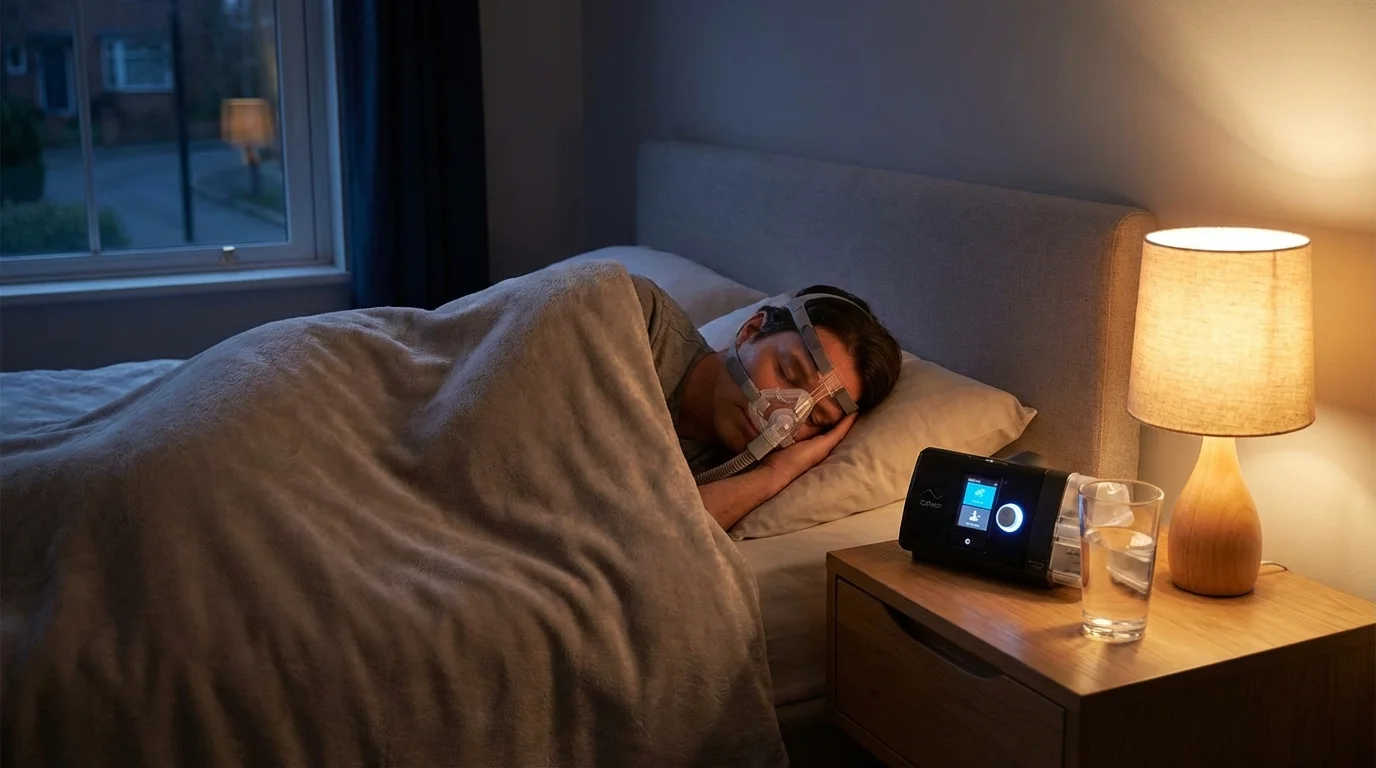
For decades, the only effective treatments for obstructive sleep apnea were mechanical: CPAP machines, oral appliances, or surgery. There was no approved drug for the condition.
That changed on December 20, 2024, when the FDA approved Zepbound (tirzepatide) as the first prescription medication ever indicated for moderate-to-severe obstructive sleep apnea in adults with obesity.
What is obstructive sleep apnea?
Obstructive sleep apnea (OSA) occurs when the muscles at the back of the throat relax during sleep, causing the airway to narrow or close. This repeatedly stops breathing during the night, sometimes dozens or hundreds of times per hour.
OSA is estimated to affect around 30 million adults in the United States, many of them undiagnosed. Its consequences include:
- Daytime fatigue and cognitive impairment
- Increased risk of high blood pressure, heart disease, and stroke
- Type 2 diabetes risk
- Depression and anxiety
Obesity is one of the strongest risk factors. Excess fat tissue, particularly around the neck and upper airway, contributes directly to airway collapse during sleep.
How does Zepbound treat sleep apnea?
The primary mechanism is weight loss. In the SURMOUNT-1 obesity trial, tirzepatide produced average body weight reductions of about 15% to 21% over 72 weeks, depending on dose. Losing this amount of weight reduces the fat deposits that physically obstruct the airway.
Whether tirzepatide has additional effects on the airway beyond weight loss is not established.
What did the clinical trials show?
The SURMOUNT-OSA program consisted of two Phase 3 trials (469 adults in total) with moderate-to-severe OSA and obesity and without type 2 diabetes. Figures below are from the Zepbound prescribing information.
SURMOUNT-OSA Trial 1 (not using CPAP)
- 52 weeks
- Primary endpoint: change in apnea-hypopnea index (AHI), the number of breathing disruptions per hour
- Tirzepatide 10 mg or 15 mg (maximum tolerated dose): AHI reduced by about 25.3 events/hour (50.7% reduction)
- Placebo: reduced by 5.3 events/hour (3%)
SURMOUNT-OSA Trial 2 (using CPAP)
- Same duration and design, but participants were continuing CPAP use (paused for 7 days before the final sleep test)
- Tirzepatide: AHI reduced by about 29.3 events/hour (58.7% reduction), versus 5.5 events/hour (2.5%) on placebo
- Larger improvements in oxygen levels during sleep (hypoxic burden) than placebo
Average weight loss was 17.7% (Trial 1) and 19.6% (Trial 2) on tirzepatide, and both trials showed greater reductions in systolic blood pressure than placebo.
Who qualifies for Zepbound for sleep apnea?
The FDA approved Zepbound for this indication in adults who have both:
- Moderate-to-severe obstructive sleep apnea: confirmed by a sleep study (AHI ≥ 15 events/hour)
- Obesity: BMI ≥ 30
Patients with overweight (BMI 27–29.9) are not currently covered under this specific indication. The weight loss indication for Zepbound separately covers overweight patients with at least one comorbidity.
Can Zepbound replace CPAP?
This is the question most OSA patients want answered.
The SURMOUNT-OSA trials did not evaluate the timing or appropriateness of stopping CPAP. But in Trial 1 (patients not using CPAP), 42% of people on Zepbound reached remission or mild OSA without daytime sleepiness, compared with 16% on placebo.
In practice, whether you can discontinue CPAP depends on:
- Your baseline AHI severity
- How much weight you lose and maintain
- Whether your AHI on follow-up testing falls below the threshold for clinically significant OSA
Do not stop using CPAP without a repeat sleep study and your doctor's guidance. For some patients with obesity-driven OSA, weight loss may eventually allow CPAP settings or use to be reviewed by their sleep specialist.
Insurance coverage for the sleep apnea indication
The sleep apnea approval opens up new insurance pathways. Some plans that previously denied Zepbound for obesity may now approve it under the OSA indication with appropriate documentation (sleep study results, BMI, diagnosis code).
Tracking sleep apnea improvement on Zepbound
OSA severity changes gradually over weeks and months as weight decreases. Logging weekly weight, injection doses, and noting any changes in sleep quality, daytime energy, or snoring gives you a practical picture of how the medication is working, useful both for self-monitoring and for your next clinical review.
Final takeaway
Zepbound became the first drug ever approved for obstructive sleep apnea in December 2024. It works primarily through weight loss, which directly reduces airway obstruction. Clinical trials showed an average reduction in breathing disruptions per hour of about 51% to 59% over 52 weeks. If you have both obesity and moderate-to-severe OSA, discuss with your doctor whether Zepbound is appropriate for your situation.
Zepbound carries a boxed warning about thyroid C-cell tumours and must not be used if you or a family member has had medullary thyroid cancer or MEN2. Get urgent medical help for severe abdominal pain that will not go away (it may spread to your back) or signs of a serious allergic reaction. If you use oral contraceptives, ask about adding a barrier method for 4 weeks after starting and after each dose increase, and tell your surgical team you take Zepbound before any procedure with anaesthesia or sedation.
Consult your healthcare provider before starting or changing any medication.
Sources
- Zepbound (tirzepatide) prescribing information, Eli Lilly (revised August 2026; SURMOUNT-OSA results in section 14.2): https://pi.lilly.com/us/zepbound-uspi.pdf
- FDA — FDA approves first medication for obstructive sleep apnea, December 20, 2024: https://www.fda.gov/news-events/press-announcements/fda-approves-first-medication-obstructive-sleep-apnea
- MedlinePlus — tirzepatide: https://medlineplus.gov/druginfo/meds/a622044.html
- SURMOUNT-1 tirzepatide trial — PubMed: https://pubmed.ncbi.nlm.nih.gov/35658024/
Related Articles
-
Zepbound FDA approval for sleep apnea: drugs.com/history/zepbound.html
-
Malhotra A, et al. Tirzepatide for the treatment of obstructive sleep apnea and obesity. N Engl J Med. 2024 (SURMOUNT-OSA)
-
Sateia MJ. International classification of sleep disorders. Chest. 2014;146(5)
FAQ
Is Zepbound approved for sleep apnea?
Yes. The FDA approved Zepbound (tirzepatide) for moderate-to-severe obstructive sleep apnea in adults with obesity on December 20, 2024. The FDA described it as the first drug treatment for OSA, and as of October 2026 it remains the only medicine FDA-approved for this use.
How does Zepbound help sleep apnea?
Primarily through weight loss. Excess weight, especially around the neck and throat, is a major driver of obstructive sleep apnea. Reducing weight reduces the physical obstruction. In the SURMOUNT-OSA trials, Zepbound reduced breathing disruptions per hour of sleep by about 51% to 59% on average over 52 weeks, compared with about 3% on placebo.
Can Zepbound replace a CPAP machine?
In clinical trials, Zepbound was studied both with and without CPAP. In both groups, it produced significant improvements in OSA severity. Whether it can fully replace CPAP depends on the individual patient and the severity of their condition. The trials did not test when or whether it is safe to stop CPAP. Discuss this with your doctor - do not stop CPAP without a repeat sleep study and medical guidance.
Who qualifies for Zepbound for sleep apnea?
The FDA approved Zepbound for moderate-to-severe OSA in adults with obesity. You need both conditions to qualify under this indication. Eligibility for insurance coverage may require additional documentation.
Does Ozempic help sleep apnea too?
Neither Ozempic nor Wegovy (semaglutide) is approved to treat sleep apnea, although weight loss from any cause can improve OSA. As of October 2026, Zepbound is the only FDA-approved medicine for OSA.
Written by
Dietician / Nutritionist
Health Content Writer
Isha Yadav is a Dietician / Nutritionist professional who contributes evidence-informed health and wellness content for Weight Easy.
View profile →Reviewed by
BHMS
Senior Medical Reviewer
Dietitian with experience in nutrition counseling, meal planning and promoting healthy lifestyles. Dedicated to help individuals achieve optimal health and well-being through personalized nutrition strategies. Skilled in providing expert guidance for managing conditions like diabetes, weight challenges and Lifestyle management.
View profile →