
GLP-1 Drugs and Surgery: When to Stop and What to Tell Your Doctor

✓ Free to download
Understand recommendations on when to stop GLP-1 drugs before surgery or procedures to reduce aspiration risks under anesthesia.
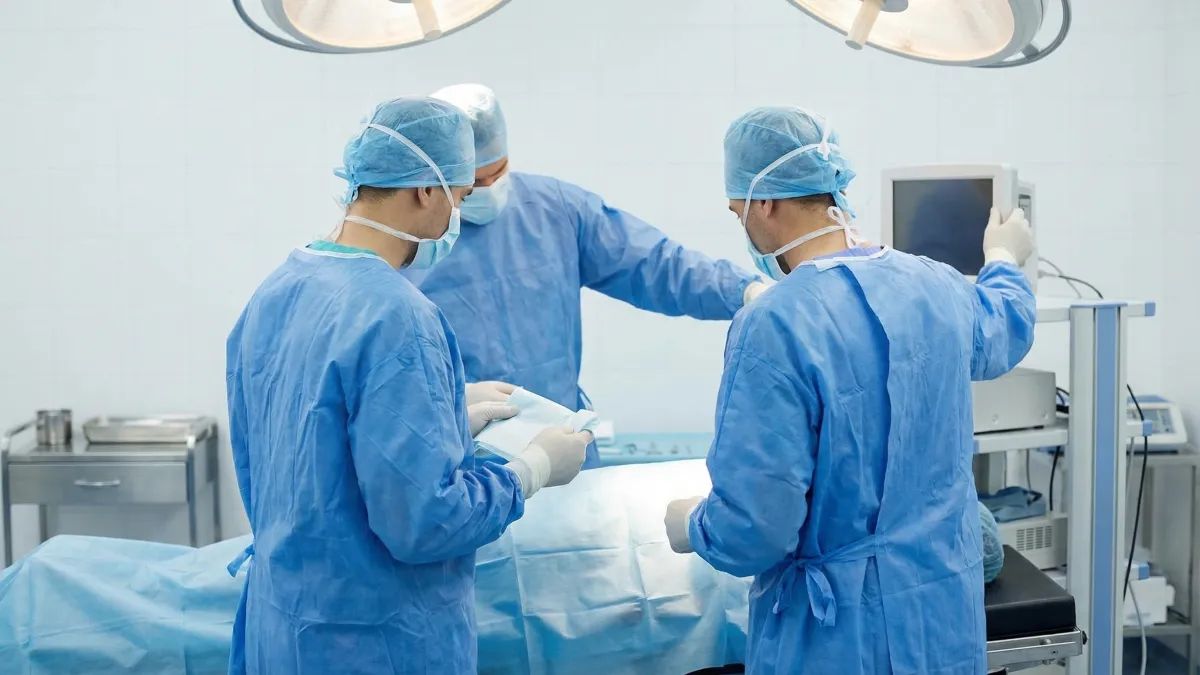
GLP-1 medications are remarkably effective, but they have a mechanism that creates a specific safety concern before surgery: they slow down how quickly your stomach empties.
Normally the stomach clears food and liquid within a few hours. GLP-1 drugs extend that significantly. Under general anaesthesia or deep sedation, this matters, because stomach contents that should have cleared can still be present, and if aspirated into the lungs, can cause serious complications.
This is why, in late 2024, the FDA added a warning about pulmonary aspiration during general anaesthesia or deep sedation to the Warnings and Precautions section of GLP-1 medicine labels (it is not a boxed warning). The label says the data are not enough to know whether changing fasting rules or pausing the medicine lowers the risk, and tells patients to inform their healthcare providers before any planned surgery or procedure.
Why GLP-1 drugs cause delayed gastric emptying
GLP-1 (glucagon-like peptide-1) is a gut hormone that, among other effects, sends signals to slow the movement of food from the stomach into the small intestine. This is a feature, not a bug, it reduces post-meal blood sugar spikes and contributes to satiety.
But it also means that a patient on Ozempic, Wegovy, Mounjaro, or Zepbound may still have food in their stomach even after what would normally be sufficient fasting.
This concern applies to all GLP-1 receptor agonists:
- Semaglutide: Ozempic, Wegovy, Rybelsus, Wegovy pill
- Tirzepatide: Mounjaro, Zepbound
- Liraglutide: Saxenda, Victoza
When to stop before surgery: the current guidelines
Guidance has changed, and different countries and hospitals do not all follow the same rules. Never stop or skip a dose on your own: follow the plan your surgical and anaesthesia team gives you.
Older advice: hold before surgery (ASA, 2023)
In 2023 the American Society of Anesthesiologists (ASA) advised holding weekly GLP-1 injections for a week before elective procedures, and daily ones on the day of the procedure. Some hospitals and some national societies still use a hold-based approach.
Newer advice: most people continue (multi-society guidance, October 2024)
In October 2024 the ASA, the American Gastroenterological Association, the American Society for Metabolic and Bariatric Surgery and other societies published joint guidance that:
- Most patients can continue their GLP-1 medicine as prescribed before elective surgery and GI endoscopy
- People at higher risk of retained stomach contents are those in the dose-escalation phase (usually the first 4 to 8 weeks, or after a dose increase), those on higher doses, and those with current GI symptoms such as nausea, vomiting, abdominal pain or constipation
- Higher-risk patients may be asked to follow a liquid-only diet for 24 hours before the procedure; elective surgery may be postponed until dose escalation is finished or GI symptoms have settled
- The decision should be shared between you, the anaesthetist, the surgeon and your prescriber, because stopping also has risks, such as higher blood sugar in people with diabetes
Daily oral GLP-1 drugs
(Wegovy pill / oral semaglutide 25 mg, Rybelsus)
Oral semaglutide has the same half-life as the injection (about one week), so missing one tablet does not clear it from your body. Ask your team what they want you to do.
What if stopping is not possible?
For urgent or emergency surgery, stopping in advance may not be feasible. In these cases:
- Always inform the anaesthetic team
- A rapid sequence induction technique may be used to reduce aspiration risk
- A point-of-care gastric ultrasound may be used to assess stomach contents before proceeding
Always tell your anaesthesiologist
Even if you have correctly stopped your GLP-1 medication, your anaesthesiologist still needs to know:
- Which drug you are on and the dose
- When you last took it
- How long you have been on the medication
Do not assume the surgical team has this from your prescribing doctor. Mention it explicitly, even if it seems obvious.
What about colonoscopies and endoscopies?
Gastroscopy and colonoscopy usually involve sedation, which carries the same aspiration risk. The 2024 multi-society guidance covers GI endoscopy as well as surgery, so the same approach applies: tell the endoscopy team and follow their instructions.
The standard bowel preparation for colonoscopy can also be affected by GLP-1 drugs. If gastric contents are not clearing normally, the bowel prep may be less effective. Discuss timing with your gastroenterologist.
What about dental procedures?
Routine dental work under local anaesthesia does not require stopping GLP-1 medication. The risk only arises with general anaesthesia or deep sedation where airway reflexes are suppressed.
For dental procedures involving conscious sedation, such as IV sedation for tooth extractions, discuss with your dentist and anaesthetist.
When to restart after surgery
There is no fixed rule, but common guidance is to restart GLP-1 medication once:
- You are tolerating oral food and fluids normally
- Any nausea from surgery or anaesthesia has resolved
- Your doctor confirms it is appropriate
Starting too early after surgery when nausea is still present can worsen it significantly. If you missed more than one or two doses, ask your prescriber how to restart: some labels advise restarting at a lower dose after a longer break, to limit nausea and vomiting.
Tracking your medication pause
If you stop your injection for surgery and restart afterward, keeping a clear record of the pause helps your Weight Easy log stay accurate. Logging the last pre-surgery dose and the first post-surgery dose separately makes the break visible in your trend data, useful context when reviewing your progress.
Final takeaway
GLP-1 medications slow stomach emptying, which creates aspiration risk under anaesthesia. Advice on whether to pause them has changed: as of October 2026, US multi-society guidance says most people can continue, with extra steps such as a 24-hour liquid diet for higher-risk patients, while some teams still ask for a pause. Do not stop on your own; follow your surgical team's plan, and always tell your anaesthesiologist that you take one of these medicines.
Related Articles
- Long-Term Safety of Semaglutide: What the Evidence Shows
- Check missed-dose timing for your prescribed medicine
- What Happens When You Stop Ozempic?
Consult your healthcare provider and surgical team for guidance specific to your procedure.
Consult your healthcare provider before starting any medication.
Sources
- American Society of Anesthesiologists — new multi-society GLP-1 guidance (October 2024): https://asahq.org/about-asa/newsroom/news-releases/2024/10/new-multi-society-glp-1-guidance
- Zepbound prescribing information: https://www.accessdata.fda.gov/drugsatfda_docs/label/2024/217806s003lbl.pdf
- Ozempic prescribing information (section 5.10, pulmonary aspiration): https://www.accessdata.fda.gov/drugsatfda_docs/label/2025/209637s025lbl.pdf
- Wegovy prescribing information: https://www.accessdata.fda.gov/drugsatfda_docs/label/2024/215256s011lbl.pdf
FAQ
Do I need to stop Ozempic before surgery?
Not always, and never on your own. GLP-1 medications slow gastric emptying, which raises the risk of inhaling stomach contents (pulmonary aspiration) under general anaesthesia or deep sedation. Older 2023 US advice was to hold weekly injections for a week, but 2024 multi-society guidance led by the American Society of Anesthesiologists says most people can continue as prescribed, with extra precautions for higher-risk patients. Your surgical and anaesthesia team will decide.
How long before surgery should I stop Ozempic?
There is no single rule as of October 2026. Some teams still ask patients to hold a weekly injection (Ozempic, Wegovy, Mounjaro, Zepbound) for a week, following 2023 guidance; others follow 2024 multi-society guidance that most patients can continue, with a 24-hour liquid diet before the procedure for those at higher risk. Follow the specific instructions from your surgical team.
What about daily GLP-1 pills (Wegovy pill, Rybelsus)?
Ask your surgical team. The 2023 ASA advice was to hold daily GLP-1 medicines on the day of the procedure, while the 2024 multi-society guidance says most patients can continue. Oral semaglutide has the same long half-life (about one week) as the injection, so skipping one tablet does not clear it from the body.
Do I need to tell my anaesthesiologist about GLP-1 drugs?
Yes - always. Even if you have stopped the medication as instructed, your anaesthesiologist needs to know you are on a GLP-1 drug so they can take appropriate precautions during sedation or anaesthesia. Do not assume your surgeon has passed on this information.
What about colonoscopies or endoscopies?
The same concern applies to endoscopy under sedation. The 2024 multi-society guidance (which includes the American Gastroenterological Association) covers GI endoscopy too: most patients can continue, with a liquid diet for 24 hours beforehand if they are at higher risk. Your gastroenterologist will advise on timing and bowel preparation.
Written by
Dietician / Nutritionist
Health Content Writer
Fashtana Khan is a Dietician / Nutritionist professional who contributes evidence-informed health and wellness content for Weight Easy.
View profile →Reviewed by
Ph. D in Food Science and Nutrition
Senior Medical Reviewer
Dr. Shunmukha Priya. S is a Ph. D in Food Science and Nutrition professional who reviews Weight Easy health content for medical and editorial accuracy.
View profile →