
What Is Hepaglide? Alkem Semaglutide in India and Liver Health

✓ Free to download
Overview of Hepaglide, an Alkem semaglutide brand approved in India for type 2 diabetes and weight management, and what the evidence says about semaglutide and liver health.
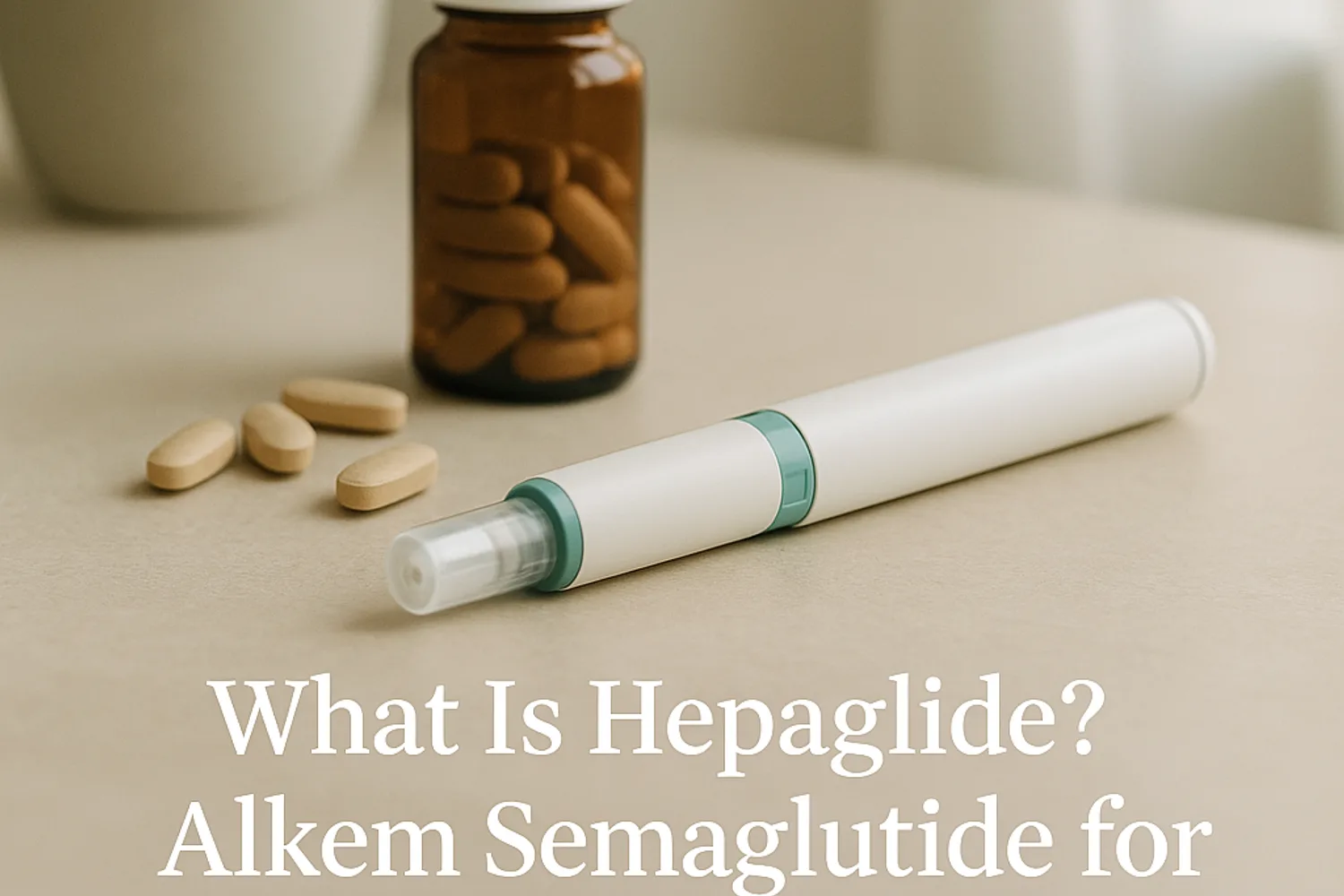
What Is Hepaglide? A Guide to Alkem's Semaglutide for Liver Health
Conversations about metabolic health in India are expanding, moving beyond blood sugar and weight to focus on a vital organ: the liver. A condition called MASH, or metabolic dysfunction-associated steatohepatitis, is a growing concern. In this landscape, Hepaglide, one of Alkem Laboratories' semaglutide brands, is often discussed in connection with liver health.
This guide provides a clear and practical overview of Hepaglide, explaining what it is, how it works, and what you might want to discuss with your doctor. Its purpose is to inform, not to advise. Consult your healthcare provider before starting any medication.
Understanding the Liver Health Challenge: From Fatty Liver to MASH
To understand why semaglutide is discussed for liver health, it's helpful to first understand the condition. The journey often begins with fatty liver disease, now called metabolic dysfunction-associated steatotic liver disease (MASLD) and previously known as Non-alcoholic Fatty Liver Disease (NAFLD).
What is MASLD (formerly NAFLD)?
MASLD is characterized by the accumulation of excess fat in the liver cells of people who drink little to no alcohol. For many, this condition is benign and causes no significant issues. However, for a subset of individuals, it can progress.
The Progression to MASH
MASH (Metabolic dysfunction-associated Steatohepatitis) is a more serious form of MASLD. The term MASH has recently been adopted to more accurately describe the condition, which was previously known as NASH (Non-alcoholic Steatohepatitis).
In MASH, the excess fat in the liver is accompanied by inflammation and liver cell damage. Over time, this inflammation and damage can lead to fibrosis (scarring) of the liver. This scarring can impair liver function and, in advanced cases, lead to cirrhosis or other serious complications. Because it often has no obvious symptoms in its early stages, it's often called a "silent" disease.
What Exactly Is Hepaglide?
Hepaglide is one of three brand names (with Semasize and Obesema) under which Alkem Laboratories launched semaglutide in India on March 21, 2026. Alkem's launch announcement says the Drug Controller General of India approved its semaglutide for type 2 diabetes and for chronic weight management alongside diet and exercise. The announcement does not list a MASH indication, and as of October 2026 we could not confirm that Hepaglide is approved in India specifically to treat MASH.
The active ingredient in Hepaglide is semaglutide, the same active ingredient as Ozempic and Wegovy. It is a once-weekly injection, available in a pre-filled disposable pen and a reusable pen for higher maintenance doses. It belongs to a class of medications known as GLP-1 (glucagon-like peptide-1) receptor agonists.
Semaglutide does have evidence in MASH: in the US, the FDA approved Wegovy (semaglutide 2.4 mg) in August 2025 for adults with MASH and moderate to advanced liver fibrosis (stages F2 to F3) without cirrhosis, under accelerated approval. Whether semaglutide is right for your liver condition is a decision for your doctor.
How Does Semaglutide Work for Liver Health?
To grasp how Hepaglide functions, we need to look at the role of the GLP-1 hormone, which our bodies produce naturally.
The Power of GLP-1
GLP-1 is an incretin hormone released by our gut after we eat. It plays several important roles in our metabolism:
- It stimulates insulin secretion: This helps lower blood sugar levels after a meal.
- It suppresses glucagon production: Glucagon is a hormone that tells the liver to release stored sugar, so suppressing it helps keep blood sugar in check.
- It slows down gastric emptying: The stomach takes longer to empty its contents, which can help you feel full for longer.
- It acts on the brain: It signals feelings of satiety, or fullness, which can help reduce overall appetite and calorie intake.
Semaglutide is a GLP-1 receptor agonist, meaning it mimics the action of our natural GLP-1 hormone, but it is designed to last much longer in the body.
The Connection to the Liver
The benefits for a liver with MASH are thought to be both indirect and direct.
Indirectly, by helping to improve blood sugar control and supporting weight loss, semaglutide reduces the overall metabolic burden on the body. Less metabolic stress often means less fat being deposited in the liver, which is a key driver of MASH.
Directly, research suggests that GLP-1 receptor agonists may also have anti-inflammatory effects within the liver itself. By potentially reducing inflammation and cellular stress, the medication may help slow down or even reverse the liver damage and fibrosis associated with MASH.
Who Might Be a Candidate for Hepaglide?
The decision to use any prescription medication is one made exclusively between a patient and their doctor. In India, Hepaglide is approved for adults with type 2 diabetes and for chronic weight management in adults with obesity, or overweight with a weight-related condition. Many people with MASH also have one of these conditions. If your doctor is considering semaglutide mainly for your liver, ask how the evidence applies to you.
A diagnosis of MASH is not made lightly. It typically involves a thorough evaluation by a healthcare professional, which may include:
- Blood tests to check for elevated liver enzymes.
- Imaging studies like an ultrasound or a specialized test called a FibroScan to assess fat in the liver and the degree of stiffness or scarring.
- In some cases, a liver biopsy may be performed to examine a small piece of liver tissue under a microscope to confirm the diagnosis and stage the disease.
In trials, semaglutide's liver benefits were shown in people with MASH and liver fibrosis, not simply fat in the liver. Your doctor can explain what your test results mean.
What to Discuss With Your Doctor
If you have been diagnosed with MASH, having an open and informed conversation with your doctor is the most important step. Here are some key areas you might want to cover.
Your Overall Health Picture
Be sure to discuss your complete medical history. This includes any other conditions you may have, such as type 2 diabetes, kidney disease, or a history of pancreatitis. Provide a full list of all other medications, vitamins, and supplements you are currently taking to avoid any potential interactions.
Understanding Potential Side Effects
Like all medications, those in the GLP-1 class can have side effects. The most common are gastrointestinal in nature, including nausea, diarrhoea, vomiting, and constipation. Ask your doctor about what to expect, how these side effects are typically managed, and when you should report them.
Seek urgent medical help for severe stomach pain that does not go away (it may spread to your back), pain in the upper right abdomen with fever or yellowing of the skin or eyes, vomiting or diarrhoea that stops you keeping fluids down, or signs of a serious allergic reaction. Tell your doctor if you take insulin or a sulfonylurea (risk of low blood sugar), if you have diabetic eye disease, about any low mood, before any surgery or sedation, and if you are pregnant or planning a pregnancy (semaglutide labels advise stopping at least 2 months before a planned pregnancy). Semaglutide should not be used by anyone with a personal or family history of medullary thyroid carcinoma or MEN 2.
Hepaglide's Role in Your Broader Treatment Plan
Medication is rarely a standalone solution. MASH is a metabolic condition, and lifestyle remains the cornerstone of its management. Discuss with your doctor how Hepaglide fits into a comprehensive plan that includes nutrition, physical activity, and weight management. A platform like Weight Easy can provide resources on lifestyle, but your medical plan must come from your doctor.
The Foundation: Lifestyle and Liver Health
It is crucial to remember that medications like Hepaglide are designed to work alongside, not replace, fundamental lifestyle efforts. A healthy, balanced diet, regular physical activity, and maintaining a healthy weight are essential for managing MASH and promoting overall liver health. These efforts help reduce liver fat, improve insulin sensitivity, and lower inflammation.
Hepaglide is one of several lower-cost semaglutide brands in India. Semaglutide has evidence for improving MASH, but in India Hepaglide is approved for type 2 diabetes and weight management, so its role in your liver care is something to discuss with your doctor. As with any medical treatment, understanding what it is and how it works is the first step toward having a productive conversation with your healthcare team.
Consult your healthcare provider before starting any medication.
Sources
- The New England Journal of Medicine: A Placebo-Controlled Trial of Subcutaneous Semaglutide in Nonalcoholic Steatohepatitis (2021) (https://www.nejm.org/doi/full/10.1056/NEJMoa2028395)
- Alkem Laboratories semaglutide launch press release, March 21, 2026 (https://admin.alkemlabs.com/uploads/Press_Release_Alkem_Semaglutide_Day_1_launch_final_fc1e90e3be.pdf)
- Wegovy (semaglutide) prescribing information, U.S. FDA, including the MASH indication (https://www.accessdata.fda.gov/drugsatfda_docs/label/2025/218316Orig1s000lbl.pdf)
- Central Drugs Standard Control Organisation (CDSCO) (https://cdsco.gov.in/opencms/opencms/en/Home/)
- National Institute of Diabetes and Digestive and Kidney Diseases (NIDDK): Definition & Facts of NAFLD & NASH (https://www.niddk.nih.gov/health-information/liver-disease/nafld-nash)
- Journal of Hepatology: A multisociety Delphi consensus statement on new fatty liver disease nomenclature (Rinella et al., 2023) (https://doi.org/10.1016/j.jhep.2023.06.003)
Written by
Dietician / Nutritionist
Health Content Writer
Kritika Singh is a Dietician / Nutritionist professional who contributes evidence-informed health and wellness content for Weight Easy.
View profile →Reviewed by
Dietician / Nutritionist, Phd scholar
Senior Medical Reviewer
Nishat Anjum is a Dietician / Nutritionist, Phd scholar professional who reviews Weight Easy health content for medical and editorial accuracy.
View profile →