
What Is Alterme? Zydus Semaglutide for Weight Loss in India

✓ Free to download
An introductory guide to Alterme in India, explaining its use, potential timeline, side effects, and considerations for semaglutide-based weight loss.
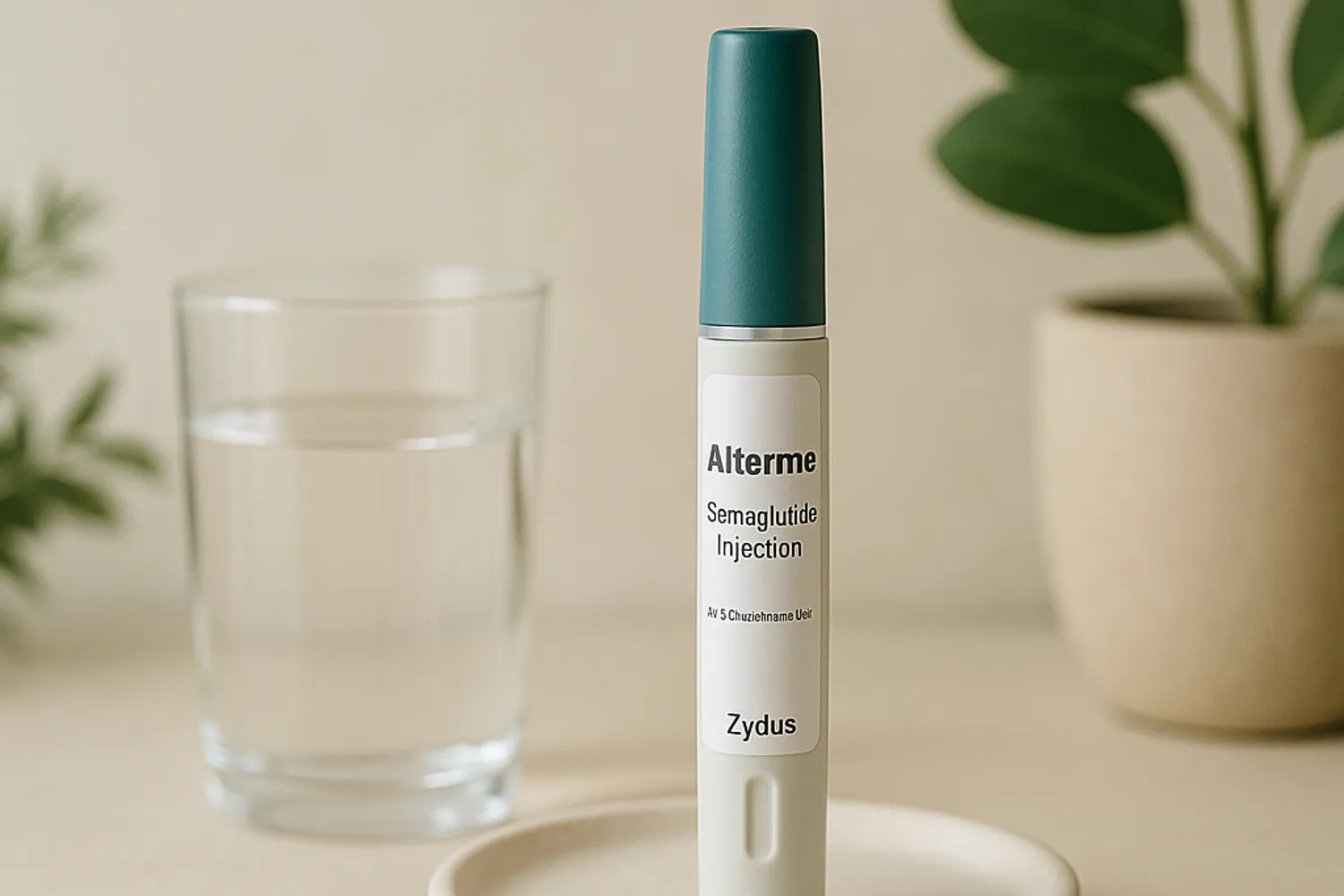
If you are hearing about Alterme for the first time, you are probably asking three things: what it is, how it works, and whether it is right for you.
This guide gives you a practical overview in plain language so you can have a better conversation with your clinician.
Important: Consult your healthcare provider before starting any medication.
What is Alterme?
Alterme is a brand of semaglutide from Zydus Lifesciences, launched in India on March 21, 2026, after the semaglutide patent expired. Zydus also sells the same product as Semaglyn and Mashema, and Lupin co-markets it as Semanext and Livarise.
The Drugs Controller General of India approved Zydus's semaglutide for adults with type 2 diabetes and for chronic weight management (alongside a reduced-calorie diet and more physical activity) in adults with a BMI of 30 or more, or 27 or more with at least one weight-related condition. It is a once-weekly injection supplied as a 15 mg/3 ml cartridge used in a reusable pen that can deliver different dose strengths. Your doctor or pharmacist should show you how to set the correct dose.
GLP-1 medications are commonly used in weight-management and metabolic-care plans because they can help with appetite regulation and satiety.
How Alterme may work in your routine
GLP-1 treatments are usually most effective when they are part of a repeatable weekly structure.
People often see progress when they combine medication with:
- Consistent injection timing and dose adherence
- Protein-forward meals and improved hydration
- Better sleep regularity
- Regular activity (including resistance training)
Medication is not a shortcut by itself. It is a support tool inside a broader behavior system.
Who may discuss Alterme with a clinician
This is typically a clinician-led decision based on your complete profile, such as:
- Body-weight history and metabolic health goals
- Current medicines and potential interactions
- Side-effect tolerance and prior treatment experience
- Long-term adherence readiness
A proper evaluation matters more than choosing a brand name quickly.
What timeline to expect
Most people do better with realistic expectations:
- Weeks 1–4: adaptation phase, appetite or fullness changes may begin
- Weeks 5–12: habits and response patterns become clearer
- 3+ months: more visible trend signals can appear with consistent use
Progress is not usually linear. Some weeks feel flat, then momentum returns.
Common side effects and practical management
As with other GLP-1 therapies, people may report nausea, bloating, constipation, reflux, or appetite shifts.
Useful first-line habits include:
- Smaller, slower meals
- Daily hydration targets
- Adequate protein intake
- Avoiding large, high-fat meals if symptoms flare
If symptoms are persistent or severe, speak with your healthcare provider promptly.
Serious side effects: when to get help
Seek urgent medical help for severe stomach pain that does not go away (it may spread to your back, a possible sign of pancreatitis), pain in the upper right abdomen with fever or yellowing of the skin or eyes (possible gallbladder problems), vomiting or diarrhoea that stops you keeping fluids down, or signs of a serious allergic reaction such as swelling of the face or throat or trouble breathing.
Also tell your doctor:
- if you take insulin or a sulfonylurea (such as glimepiride or gliclazide), because the risk of low blood sugar rises
- about any change in vision if you have diabetic eye disease
- about new or worsening low mood or thoughts of self-harm
- before any surgery, endoscopy or sedation
- if you are pregnant, planning a pregnancy or breastfeeding (semaglutide labels advise stopping at least 2 months before a planned pregnancy)
Semaglutide should not be used by anyone with a personal or family history of medullary thyroid carcinoma or MEN 2 (the US label carries a boxed warning about thyroid C-cell tumours).
Safety and medication handling reminders
- Do not self-adjust dose or frequency
- Do not double doses after missed doses unless instructed
- Keep a weekly log of dose day, symptoms, appetite, and weight trend
- Escalate new or worrying symptoms early
Availability can vary by city, stock, and prescribing setup, so verify current supply at your local pharmacy.
Why tracking helps more than guesswork
Even a simple weekly tracker can reduce stress and improve treatment consistency.
Track these basics:
- Dose day and amount
- Appetite pattern through the week
- Side-effect intensity (0–10)
- Hydration and protein consistency
- Weekly weight trend
This gives your clinician better data than memory alone.
The bottom line
Alterme may be a useful option for some people when chosen carefully and used consistently under medical supervision. The strongest results usually come from combining medication with repeatable daily habits—not from dose changes alone.
Keep expectations realistic, track trends weekly, and review progress with your clinician.
Consult your healthcare provider before starting any medication.
Sources
- Lupin press release, Lupin and Zydus licensing agreement for semaglutide injection in India, March 17, 2026: https://lupin.com/media/press-releases/lupin-and-zydus-sign-licensing-agreement-for-co-marketing-innovative-semaglutide-injection-in-india
- Zydus semaglutide launch (BioSpectrum India), March 21, 2026: https://www.biospectrumindia.com/news/73/27523/zydus-launches-semaglutide-injection-in-reusable-multi-dose-pen-device-in-india.html
- Ozempic prescribing information (FDA): https://www.accessdata.fda.gov/drugsatfda_docs/label/2025/209637s025lbl.pdf
- MedlinePlus — semaglutide injection: https://medlineplus.gov/druginfo/meds/a618008.html
- Wegovy prescribing information: https://www.accessdata.fda.gov/drugsatfda_docs/label/2024/215256s011lbl.pdf
- https://www.diabetes.org.uk/about-diabetes/looking-after-diabetes/treatments/tablets-and-medication/glp-1
FAQ
What is Alterme?
Alterme is a brand of semaglutide, a once-weekly GLP-1 injection, from Zydus Lifesciences. It was launched in India on March 21, 2026, and is approved for type 2 diabetes and chronic weight management, to be used under clinician guidance.
How quickly does Alterme work?
Some people notice appetite changes in early weeks, while visible weight changes usually develop over a longer timeline with consistent use.
Can I take Alterme without lifestyle changes?
Medication works best when paired with sustainable habits like protein-focused meals, hydration, sleep, and regular movement.
Is Alterme right for everyone?
No. Suitability depends on your medical history, current medicines, and clinician assessment.
Should I change my dose myself?
No. Dose changes should always be discussed with your prescribing clinician.
Written by
Content Writer
Piyush is a content writer who contributes evidence-informed health and wellness content for Weight Easy.
View profile →Reviewed by
Immunobiologist
Senior Medical Reviewer
Dr Kshama Jain is an Immunobiologist professional who reviews Weight Easy health content for medical and editorial accuracy.
View profile →