
Zepbound vs Wegovy: Comparison Guide

✓ Free to download
Compare Zepbound and Wegovy based on available information to understand differences and considerations for weight loss treatments.
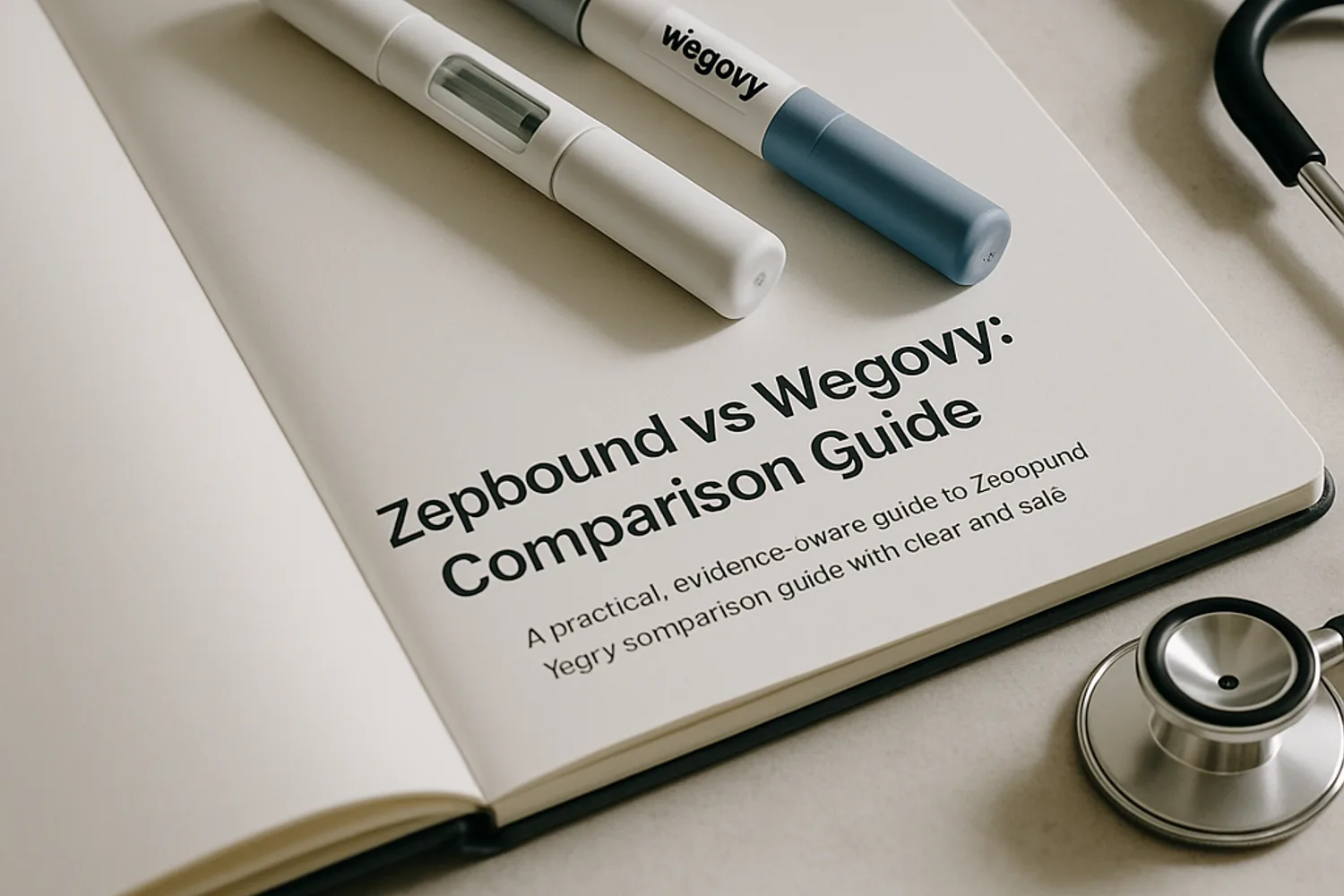
Zepbound vs Wegovy: A Comparison Guide
The landscape of weight management is evolving, with new medications offering effective, evidence-based options for individuals living with obesity or who are overweight with related health conditions. Among the most discussed are Zepbound (tirzepatide) and Wegovy (semaglutide). Both are available as once-weekly injections that have shown significant results in clinical trials (Wegovy is also now available as a once-daily tablet in the US), but they have key differences.
This guide provides a clear, practical comparison to help you understand these two treatments. The goal is to empower you with knowledge so you can have a more informed conversation with your doctor about your health journey. Consult your healthcare provider before starting any medication.
What Are Zepbound and Wegovy?
At their core, both Zepbound and Wegovy work by mimicking hormones in your gut that regulate appetite and food intake. However, they target slightly different pathways to achieve this.
Understanding Zepbound (Tirzepatide)
Zepbound’s active ingredient is tirzepatide. What makes it unique is that it is a dual-action medication. It acts as a GIP (glucose-dependent insulinotropic polypeptide) and GLP-1 (glucagon-like peptide-1) receptor agonist.
In simpler terms, it mimics two separate gut hormones involved in managing blood sugar and appetite. This dual mechanism helps to decrease food intake and slow down how quickly food leaves your stomach, making you feel fuller for longer.
Understanding Wegovy (Semaglutide)
Wegovy’s active ingredient is semaglutide. It is a GLP-1 receptor agonist, meaning it mimics the GLP-1 hormone.
By activating GLP-1 receptors in the brain, Wegovy helps regulate your appetite, leading you to feel less hungry and more satisfied after meals. Like Zepbound, it also slows stomach emptying, contributing to a prolonged feeling of fullness.
The Core Comparison: How Do They Stack Up?
While both medications share the goal of aiding weight loss, their differences in mechanism, efficacy, and other factors are important to understand.
Mechanism of Action: The Key Difference
The most significant distinction lies in their targets.
- Wegovy targets one hormone receptor: GLP-1.
- Zepbound targets two hormone receptors: GLP-1 and GIP.
This dual-agonist approach of Zepbound is a newer development in weight management medications. The addition of GIP activity is thought to potentially enhance the effects on appetite and metabolism seen with GLP-1 action alone.
Efficacy: What the Studies Show
Clinical trials provide the best data for comparing effectiveness. The pivotal results below come from separate, large-scale studies, and there is now also a head-to-head trial.
In the SURMOUNT-1 trial for Zepbound, participants taking the highest dose (15 mg) achieved an average weight loss of 20.9% of their body weight over 72 weeks when combined with lifestyle changes.
In the STEP 1 trial for Wegovy, participants on the highest dose (2.4 mg) achieved an average weight loss of 14.9% of their body weight over 68 weeks, also combined with lifestyle intervention.
In the head-to-head SURMOUNT-5 trial (751 adults with obesity and without diabetes, 72 weeks, maximum tolerated doses), average weight loss was 20.2% with tirzepatide versus 13.7% with semaglutide.
While both outcomes are substantial and represent a major advancement in medical weight management, both the pivotal trials and the head-to-head trial show a higher average weight loss for participants taking Zepbound. Individual results vary.
Side Effects: What to Expect
The side effect profiles for Zepbound and Wegovy are very similar, which is expected given their shared GLP-1 mechanism. The most common side effects are gastrointestinal and include:
- Nausea
- Diarrhea
- Vomiting
- Constipation
- Stomach pain
These side effects are typically mild to moderate in intensity and often decrease over time as your body adjusts to the medication. To help manage them, both treatments involve a dose-escalation schedule, where you start on a low dose that is gradually increased over several months.
Both medications also carry warnings about more serious but less common potential risks, which your doctor will discuss with you. These include pancreatitis, gallbladder problems, kidney problems from dehydration, serious allergic reactions, low blood sugar when combined with insulin or sulfonylureas, aspiration during anaesthesia or deep sedation, and a boxed warning for a risk of thyroid C-cell tumors (neither is used by people with a personal or family history of medullary thyroid cancer or MEN2). Zepbound can also make oral contraceptives less effective, so a barrier method is advised for 4 weeks after starting and after each dose increase.
Get urgent medical help for severe abdominal pain that does not go away (it may spread to your back), swelling of the face or throat, or trouble breathing.
Practical Considerations for Patients
Beyond the clinical data, practical aspects of using these medications are also important.
Administration and Dosing
Both Zepbound and Wegovy injections are self-administered once weekly under the skin of the stomach, thigh, or upper arm. Both come in pre-filled pens; Zepbound is also available as a multi-dose KwikPen and as vials, and in the US Wegovy is also available as a once-daily tablet.
As mentioned, both require a gradual dose titration. Zepbound starts at 2.5 mg and increases in 2.5 mg steps after at least 4 weeks on each dose (maintenance 5 mg, 10 mg or 15 mg). Wegovy injection starts at 0.25 mg and increases every 4 weeks to a usual maintenance dose of 2.4 mg; in the US, adults who need more weight reduction may be moved up to a maximum of 7.2 mg (Wegovy HD). Your provider decides when and whether to increase. This process is crucial for minimizing side effects.
Who is a Candidate?
The general weight-management indications for both medications are similar. They are typically prescribed for adults with:
- A Body Mass Index (BMI) of 30 kg/m² or greater (obesity).
- A BMI of 27 kg/m² or greater (overweight) who also have at least one weight-related health condition, such as high blood pressure, type 2 diabetes, or high cholesterol.
There are also differences. In the US, Zepbound is also approved for moderate to severe obstructive sleep apnea in adults with obesity. Wegovy is also approved to reduce the risk of heart attack, stroke and cardiovascular death in adults with heart disease and obesity or overweight, for a type of fatty liver disease (MASH) with moderate to advanced fibrosis, and for weight management in children aged 12 and older with obesity. Approvals differ in the UK and India.
Ultimately, your healthcare provider will determine if you are a suitable candidate based on your full medical history, current health status, and treatment goals.
Making an Informed Choice with Your Doctor
Choosing between Zepbound and Wegovy is a decision that should be made in partnership with a qualified healthcare professional. Both are highly effective medications that can be powerful tools for long-term weight management when used as part of a comprehensive plan that includes diet and physical activity.
Here’s a summary of the key points to discuss with your provider:
- Mechanism: Zepbound's dual GIP/GLP-1 action is a key differentiator from Wegovy's single GLP-1 action.
- Efficacy: In their main clinical trials and in the head-to-head SURMOUNT-5 trial, Zepbound demonstrated a higher average weight loss than Wegovy.
- Side Effects: Both have very similar side effect profiles, primarily related to the digestive system.
- Your Health Profile: Your specific health history, including any other conditions you have, will play a significant role in determining which medication may be safer and more appropriate for you.
The "best" medication is the one that is right for your individual body, lifestyle, and health needs. An open conversation with your doctor is the most important step forward. Consult your healthcare provider before starting any medication.
By understanding the facts and working with a trusted medical expert, you can make a confident and informed decision on your path toward better health.
Related reading
Some readers may still search the reversed phrasing, Wegovy vs Zepbound. This page is the primary comparison resource for both query forms.
Sources
- Zepbound prescribing information (revised August 2026): https://pi.lilly.com/us/zepbound-uspi.pdf
- Wegovy prescribing information (revised June 2026): https://www.novo-pi.com/wegovy.pdf
- Jastreboff AM, et al. Tirzepatide once weekly for the treatment of obesity — PubMed: https://pubmed.ncbi.nlm.nih.gov/35658024/
- Wilding JPH, et al. Once-weekly semaglutide in adults with overweight or obesity — PubMed: https://pubmed.ncbi.nlm.nih.gov/33567185/
- Aronne LJ, et al. Tirzepatide as compared with semaglutide for the treatment of obesity (SURMOUNT-5). N Engl J Med. 2025;393:26-36 — ACC summary: https://www.acc.org/latest-in-cardiology/journal-scans/2025/07/10/09/09/surmount-5
- Zepbound official patient website: https://zepbound.lilly.com/
- Wegovy official patient website: https://www.wegovy.com/
Written by
Dietician / Nutritionist
Health Content Writer
Vaishali is a Dietician / Nutritionist professional who contributes evidence-informed health and wellness content for Weight Easy.
View profile →Reviewed by
Dietician / Nutritionist, Phd scholar
Senior Medical Reviewer
Nishat Anjum is a Dietician / Nutritionist, Phd scholar professional who reviews Weight Easy health content for medical and editorial accuracy.
View profile →