
What Is Pemvidutide? The GLP-1 Drug Being Studied for Muscle-Sparing Weight Loss

✓ Free to download
Get an overview of pemvidutide, an investigational GLP-1 and glucagon dual agonist being studied for weight loss, lean mass preservation and fatty liver disease (MASH).
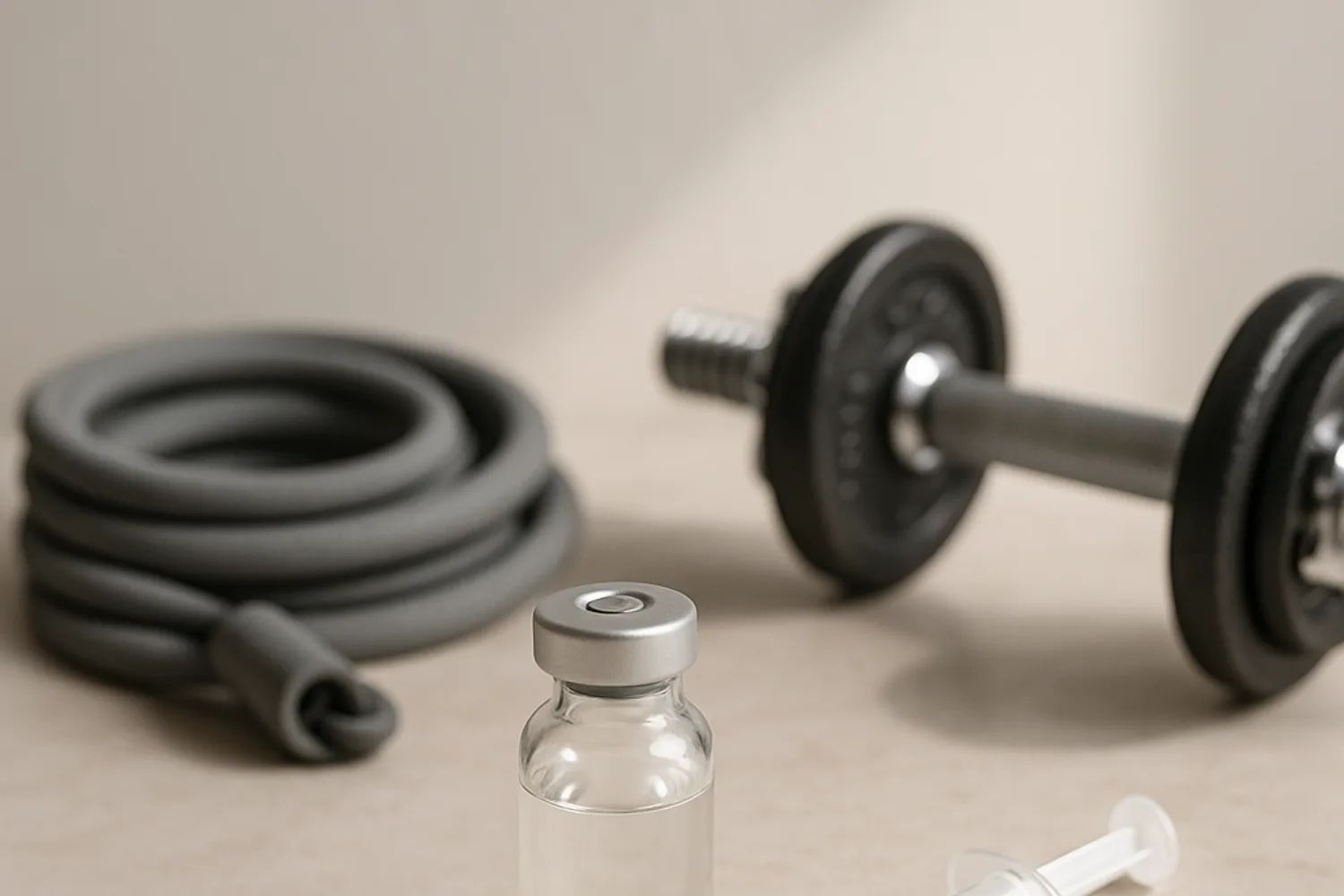
What Is Pemvidutide? The GLP-1 Drug Being Studied for Muscle-Sparing Weight Loss
The world of weight management is rapidly evolving, with a new class of medications known as GLP-1 receptor agonists leading the conversation. While effective for weight loss, a common concern has emerged: ensuring that weight loss comes from fat and not from essential, metabolism-supporting muscle. This is where pemvidutide, an investigational medication, enters the picture with a distinct goal.
Pemvidutide, developed by Altimmune, is a medication currently in clinical development. It is being studied for weight loss and fatty liver disease, and its developer has highlighted early data suggesting that less of the weight lost came from lean mass. It belongs to a newer category of drugs called dual-receptor agonists. Consult your healthcare provider before starting any medication.
How Does Pemvidutide Work? A Dual-Action Approach
To understand pemvidutide, it helps to know that it targets two different hormone receptors in the body at the same time: the GLP-1 receptor and the glucagon receptor. This dual-action mechanism is what makes it different from many existing weight management medications.
The GLP-1 Receptor (The "Appetite Manager")
Like other popular medications in its class, pemvidutide activates the GLP-1 (glucagon-like peptide-1) receptor. When this receptor is activated, it sends signals to your brain that you are full, which can help reduce appetite and overall calorie intake. It also slows down the rate at which your stomach empties, contributing to a longer-lasting feeling of satiety after meals. This part of its action is well-established for supporting weight loss and improving blood sugar control.
The Glucagon Receptor (The "Energy Mobilizer")
Here is where pemvidutide differs. In addition to activating GLP-1, it also activates the glucagon receptor. Glucagon is a hormone that essentially does the opposite of insulin; it tells your body to release stored energy (in the form of glucose and fatty acids) into the bloodstream to be used as fuel.
The scientific thinking behind this dual approach is that by activating the glucagon receptor, the drug may increase overall energy expenditure. Essentially, it encourages the body to burn more calories. By combining the appetite-suppressing effects of GLP-1 with the energy-burning effects of glucagon, the goal is to create a more powerful and efficient path to weight loss.
The Goal: Preserving Muscle During Weight Loss
When you lose weight, especially rapidly, you don't just lose fat. You often lose lean body mass, which includes muscle. Losing too much muscle can be counterproductive for a few key reasons:
- Slower Metabolism: Muscle is more metabolically active than fat. The more muscle you have, the more calories your body burns at rest. Losing muscle can slow your metabolism, making it harder to continue losing weight or to maintain it long-term.
- Reduced Strength: Muscle is crucial for physical strength, stability, and overall daily function. Preserving it is vital for maintaining an active lifestyle and quality of life.
- Body Composition: The ultimate goal for many is not just a lower number on the scale but a healthier body composition—meaning a lower ratio of fat to muscle.
Researchers think that glucagon activation may push the body to use more stored fat for fuel, which could help "spare" muscle, but this is still a hypothesis. In the 48-week phase 2 MOMENTUM trial (391 adults with obesity or overweight without diabetes), average weight loss was 10.3%, 11.2% and 15.6% on the 1.2 mg, 1.8 mg and 2.4 mg doses, compared with 2.2% on placebo. In an MRI substudy of 50 participants on pemvidutide, about 21.9% of the weight lost was lean mass. These are company-reported results from a small subgroup, and no head-to-head trial has compared muscle loss with other GLP-1 medicines.
Who Is Pemvidutide Being Studied For?
Pemvidutide has been studied in adults with obesity or who are overweight and have at least one weight-related health condition (the phase 2 MOMENTUM trial). It is also in phase 2 trials for alcohol use disorder and alcohol-associated liver disease.
Beyond weight management, it is also being investigated for its potential to treat metabolic dysfunction-associated steatohepatitis (MASH), a serious form of fatty liver disease. In the phase 2b IMPACT trial in people with MASH and moderate to advanced liver scarring (fibrosis), MASH resolved at 24 weeks in 58% and 52% of people on the 1.2 mg and 1.8 mg doses, compared with 20% on placebo. It did not significantly improve fibrosis at 24 weeks.
Understanding the Research and Current Status
It is important to understand that pemvidutide is an investigational drug. This means it has not yet been approved by regulatory agencies like the U.S. Food and Drug Administration (FDA) or the European Medicines Agency (EMA).
Before any new drug can be made available to the public, it must go through a rigorous, multi-phase clinical trial process to prove it is both safe and effective for its intended use. As of October 2026, a phase 3 trial of pemvidutide in MASH (PERFORMA) is recruiting. We could not find a registered phase 3 trial of pemvidutide for obesity. It is not available to prescribe, and products sold online as "pemvidutide" are not approved or quality-controlled medicines.
Potential Side Effects and Considerations
Based on clinical trial data and the known effects of GLP-1 and glucagon agonists, the side effects of pemvidutide are often related to the digestive system. The most commonly reported side effects in studies include:
- Nausea
- Vomiting
- Diarrhea
- Constipation
- Decreased appetite
These effects are typically mild to moderate and often lessen over time as the body adjusts to the medication. The full safety profile will be determined as more data from ongoing and future clinical trials becomes available.
How to Talk to Your Doctor
If you are considering options for weight management, a conversation with your doctor is the best place to start. You can create a comprehensive plan that is tailored to your unique health profile and goals.
Consider asking questions that help you understand all your choices:
- What are the benefits and risks of different approaches to weight management for me?
- How can we make sure my plan focuses on fat loss while preserving muscle?
- What role might nutrition and physical activity play alongside any potential medication?
This open dialogue will help you and your provider work together to find the most effective and sustainable path forward for your health. Consult your healthcare provider before starting any medication.
The Takeaway
Pemvidutide is an interesting development in metabolic medicine, and early data suggest it may help limit lean mass loss during weight loss, although this has not been confirmed in large trials. As a dual GLP-1 and glucagon receptor agonist, its mechanism aims to reduce appetite while also increasing energy expenditure, with the goal of targeting fat stores more effectively.
While it is still an investigational drug making its way through the necessary clinical trials, pemvidutide highlights a growing focus in healthcare: achieving not just weight loss, but a healthy and sustainable change in body composition.
Sources
- Altimmune Inc. (Pipeline: Pemvidutide) - https://www.altimmune.com/pipeline/pemvidutide/
- ClinicalTrials.gov (Efficacy and Safety of ALT-801 [pemvidutide] in the Treatment of Obesity [MOMENTUM]) - https://clinicaltrials.gov/study/NCT05295875
- HCPLive, MOMENTUM: pemvidutide lean mass data at ADA 2024 (June 23, 2024) - https://hcplive.com/view/momentum-pemvidutide-boasts-class-leading-lean-mass-preservation-with-weight-loss
- Noureddin M, et al. Pemvidutide for MASH (IMPACT): 24-week results of a phase 2b trial. The Lancet, 2025 - https://pubmed.ncbi.nlm.nih.gov/41237796/
- ClinicalTrials.gov (PERFORMA: phase 3 study of pemvidutide in MASH) - https://clinicaltrials.gov/study/NCT07795164
- American Liver Foundation (Metabolic Dysfunction-Associated Steatotic Liver Disease (MASLD)) - https://liverfoundation.org/liver-diseases/metabolic-dysfunction-associated-steatotic-liver-disease-masld/
Written by
Dietician / Nutritionist
Health Content Writer
Fashtana Khan is a Dietician / Nutritionist professional who contributes evidence-informed health and wellness content for Weight Easy.
View profile →Reviewed by
BHMS
Senior Medical Reviewer
Dietitian with experience in nutrition counseling, meal planning and promoting healthy lifestyles. Dedicated to help individuals achieve optimal health and well-being through personalized nutrition strategies. Skilled in providing expert guidance for managing conditions like diabetes, weight challenges and Lifestyle management.
View profile →